Few things get your heart racing like the sudden thump-thump-thump of a flat tire while you’re cruising down I-4 or I-275. A highway flat — especially a full blowout — is one of the more dangerous situations a driver faces, precisely because it happens at speed with traffic all around. The good news: if you know what to do, you can handle it calmly and safely. Here’s the step-by-step.
Step 1: Don’t Panic or Slam the Brakes
When a tire blows at highway speed, your instinct is to hit the brakes hard. Resist it. Slamming the brakes on a blown tire can throw the car off balance and cause a skid. Instead, grip the wheel firmly with both hands, ease off the gas, and let the car slow gradually. Keep it pointed straight while you bleed off speed.
Step 2: Signal and Move to the Shoulder
Turn on your hazard lights so drivers around you know something’s wrong. As the car slows, check your mirrors and steer smoothly toward the right shoulder (or a left shoulder/median if that’s closer and safer on a divided highway like the Selmon Expressway). Get as far off the travel lanes as you can — the farther from traffic, the safer you are.
Step 3: Stop Somewhere Safe
Try to stop on a straight, flat, visible stretch — not on a curve or just over a hill where approaching drivers can’t see you. If you can coast to an exit ramp or a wide emergency pull-off, even better. On Tampa’s elevated expressway sections, keep going (slowly, hazards on) until you reach a spot with a real shoulder if the current one is dangerously narrow.
Step 4: Assess — But Stay Out of Traffic
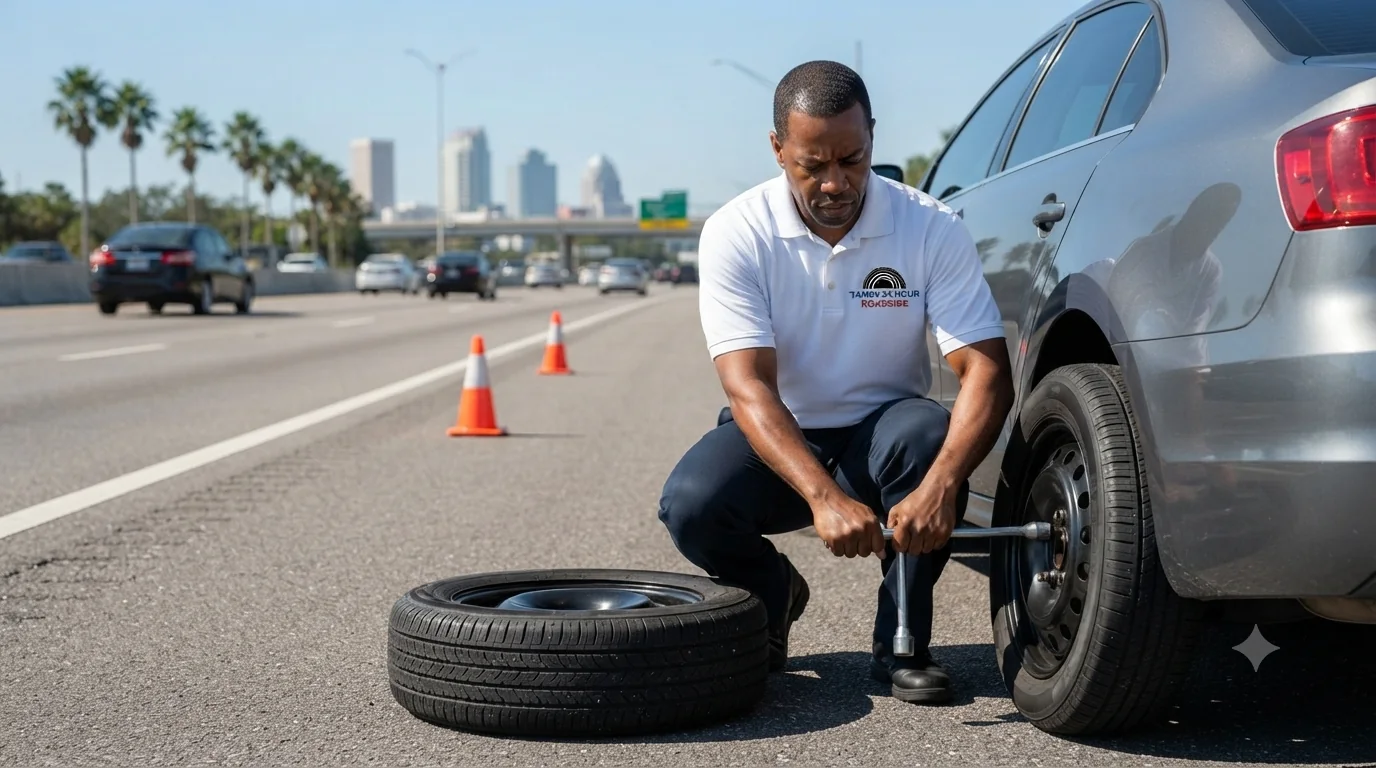
Once stopped, set your parking brake and turn on your hazards. Here’s the critical safety judgment: changing a tire yourself on a busy highway shoulder is genuinely dangerous. Cars pass just feet away at 70 mph, and the wind blast alone is destabilizing. If the flat is on the traffic side of the car, do not attempt a DIY change — you’d be kneeling in the path of traffic.
If you have a spare and the flat is on the safe (shoulder) side, you’re on a wide shoulder, and you’re confident, you can change it. Otherwise, the safest move is to stay in your vehicle (buckled, well off the lanes) and call for professional roadside tire service.
Step 5: Call for Help
A mobile roadside technician will come change your tire or repair it right there, so you avoid risking yourself on the shoulder. Give them your exact location — the highway name, direction, and nearest mile marker or exit. In the Tampa area, a local 24/7 service can typically reach a highway flat in 30 to 45 minutes and prioritizes these calls because of the safety risk.
What NOT to Do
- Don’t keep driving far on a blown tire — it can damage the wheel and cause loss of control. A short, slow crawl to a safer spot is fine; miles are not.
- Don’t stand outside your car on the traffic side while you wait.
- Don’t attempt a change on a narrow shoulder with traffic whipping past — no tire is worth it.
- Don’t forget your hazard lights — visibility is your best protection.
Preventing the Next Blowout
Many highway blowouts trace back to under-inflation, worn tread, or old tires — all made worse by Florida’s heat, which raises tire pressure and stresses aging rubber. Check your tire pressure monthly, inspect for cracks and low tread, and replace tires before they’re bald. A little prevention keeps you off the shoulder of I-275 in the first place.
But when a flat does happen, stay calm, get safely off the road, and call for help rather than risking a shoulder-side change. That’s the move that keeps you safe.
Need Roadside Help in Tampa Right Now?
We’re open 24/7 with an average 30–45 minute response across Tampa Bay. Flat tire, dead battery, lockout, or fuel — one call does it.
(813) 970-5481Frequently Asked Questions
What should you do when you get a flat tire on the highway?
Don’t brake hard. Grip the wheel, ease off the gas, turn on hazards, and steer smoothly to the shoulder. Stop somewhere safe and visible, then call for roadside tire help rather than risking a change in traffic.
Should I brake when my tire blows out?
No — avoid slamming the brakes. Hold the wheel firmly, ease off the accelerator, and let the car slow gradually while steering toward the shoulder. Hard braking can cause a skid.
Is it safe to change a tire on the highway shoulder?
It’s risky. Traffic passing at high speed just feet away is dangerous, especially if the flat is on the traffic side. The safest option is to call a mobile roadside service to change it for you.
How far can you drive on a flat tire?
Only a very short distance at low speed to reach a safer spot. Driving miles on a flat damages the wheel and can cause loss of control. Stop as soon as you’re safely off the road.
What causes tire blowouts on Tampa highways?
Under-inflation, worn tread, old tires, road debris, and Florida’s heat (which raises tire pressure) are the main causes. Potholes after heavy rain also contribute.
How fast can roadside help reach a highway flat in Tampa?
A local 24/7 service typically reaches highway flats in 30 to 45 minutes and prioritizes them due to the safety risk of being stranded on the shoulder.
Should I stay in my car with a flat on the highway?
Yes, if you’re on a busy road. Staying buckled inside with hazards on is safer than standing outside near traffic while you wait for help.
What if I don’t have a spare tire?
Many newer cars don’t include one. A mobile roadside technician can plug or patch a repairable tire on-site or get you re-inflated enough to reach a shop.
Can a flat tire be repaired or does it need replacing?
If the puncture is in the tread area, it can often be plugged or patched. Sidewall damage or a blowout usually means the tire needs replacing.
How do I know my exact location on the highway?
Look for the small green mile-marker signs along the shoulder, note the nearest exit number, and the highway name and direction. This helps roadside help reach you fast.
Why do tires blow out more in summer?
Heat increases the air pressure inside tires and softens aging rubber, making worn or under-inflated tires more likely to fail — a real factor in Tampa’s hot climate.
How can I prevent highway blowouts?
Check tire pressure monthly, inspect for low tread and cracks, avoid overloading, and replace old tires before they fail. Prevention is the best protection against a highway flat.