Most people associate dead batteries with freezing northern winters. So it surprises a lot of Tampa drivers to learn that heat is actually harder on a car battery than cold. Florida’s relentless sun and high temperatures quietly cook your battery from the inside — which is exactly why dead-battery calls are among the most common roadside problems in the Tampa area. Here’s what’s really going on under your hood.
How Heat Destroys a Car Battery
A typical car battery is a lead-acid battery filled with an electrolyte solution. Heat attacks it in two main ways:
- Evaporation: High temperatures cause the battery’s internal fluid to evaporate, even in sealed batteries. Less electrolyte means less capacity and a shorter life.
- Accelerated corrosion: Heat speeds up the chemical reactions inside the battery, corroding the internal plates and grid. Over time this degrades the battery’s ability to hold a charge.
Under the hood of a car parked in a Tampa summer, temperatures can climb far higher than the air temperature outside. That constant thermal stress is why batteries in hot climates simply don’t last as long.
The Real-World Lifespan Difference
In cooler northern states, a car battery often lasts five to six years. In hot climates like Florida, that drops to roughly three to four years — sometimes less. If you’ve moved to Tampa from up north and feel like your batteries die faster here, you’re absolutely right. The heat is the difference.
What makes it sneaky is the failure pattern. A heat-damaged battery often works fine right up until it doesn’t. It cranks normally for months, then one morning — or worse, in a parking lot after work — it’s just dead. Heat degrades the battery internally without obvious warning until it can no longer deliver the current needed to start the engine.
Warning Signs Your Battery Is Failing
Even though heat failures can be abrupt, there are usually some clues if you know what to watch for:
- Slow, labored cranking when you start the car — a groaning “rrr…rrr…rrr” instead of a quick start.
- Dimming headlights or interior lights, especially at idle.
- Electronics acting up — flickering dash displays, radio resets, power windows moving slowly.
- The battery is 3+ years old — in Florida, that’s already near the end of the road.
- A swollen or bloated battery case, which heat damage can cause.
- A rotten-egg (sulfur) smell near the battery, signaling a leaking or overheating cell.
How to Make Your Battery Last Longer in Tampa
You can’t beat the heat entirely, but you can slow the damage:
- Park in the shade or a garage whenever possible to reduce under-hood temperatures.
- Keep the terminals clean. Corrosion — common in Florida’s humidity — adds resistance and strain. Clean, tight terminals help.
- Drive regularly. Short trips and long periods of sitting prevent a full recharge. Longer drives keep the battery topped up.
- Get it tested. Once your battery passes the three-year mark, have it load-tested periodically so you can replace it on your terms, not stranded in a parking lot.
- Turn off accessories when the engine’s off — lights, chargers, and dash cams all drain a battery that’s already heat-stressed.
When It’s Time to Replace
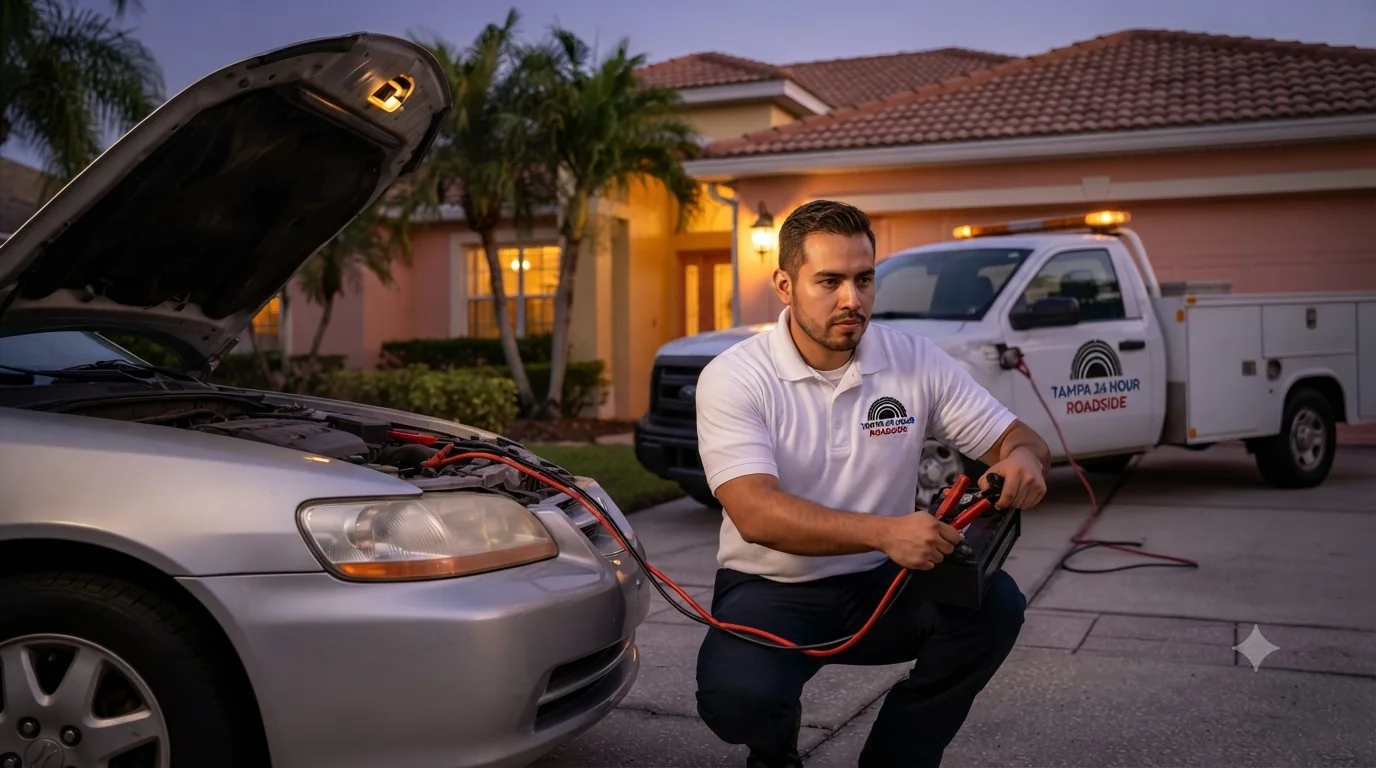
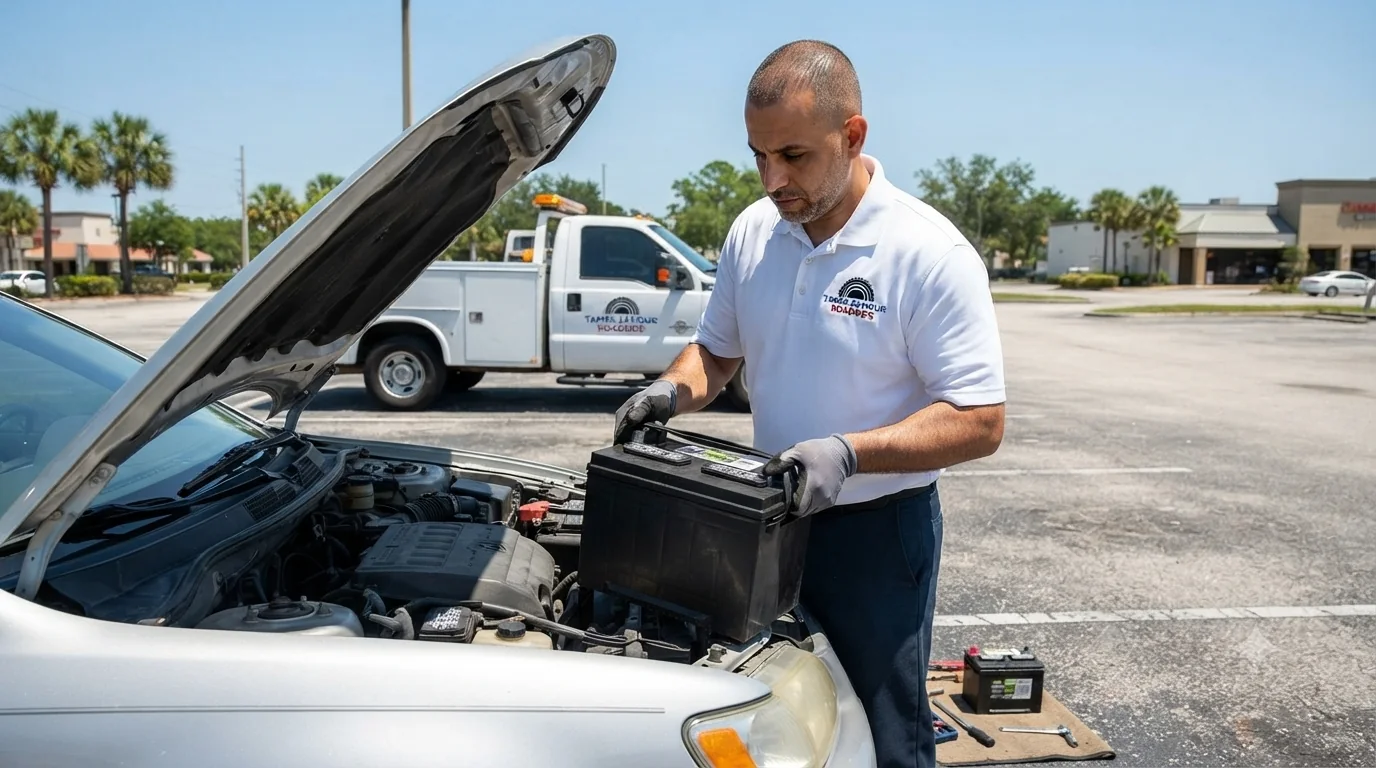
If your battery is three or more years old and showing any warning signs, replace it proactively — it’s far cheaper and less stressful than a roadside breakdown. Many mobile services in Tampa can test your battery and, if needed, replace it right in your driveway, so you never have to gamble on whether it’ll start tomorrow.
The Bottom Line
In Tampa, heat — not cold — is what kills car batteries, cutting their lifespan to about three to four years by evaporating electrolyte and corroding internal plates. Watch for slow cranking and dimming lights, park in the shade, keep terminals clean, and test your battery once it passes three years. Catch it early and you’ll trade a stressful roadside dead-battery call for a quick, planned replacement.
Need Roadside Help in Tampa Right Now?
We’re open 24/7 with an average 30–45 minute response across Tampa Bay. Flat tire, dead battery, lockout, or fuel — one call does it.
(813) 970-5481Frequently Asked Questions
Why do car batteries die so fast in Florida heat?
Heat evaporates the battery’s internal fluid and accelerates corrosion of its plates, degrading it from the inside. Under-hood temperatures in Florida’s summer are especially punishing, cutting battery life short.
Is heat or cold worse for car batteries?
Heat is actually worse for the battery itself. Cold makes a weak battery struggle to start, but heat is what causes the underlying internal damage that shortens lifespan.
How long do car batteries last in Tampa?
Roughly 3 to 4 years in Florida’s heat, versus 5 to 6 years in cooler climates. If yours is past 3 years and cranking slowly, it may be time to replace it.
What are the signs of a failing car battery?
Slow cranking, dimming lights, flickering electronics, a battery over 3 years old, a swollen case, or a rotten-egg smell near the battery all signal it may be failing.
Can a battery die without warning in the heat?
Yes. Heat-damaged batteries often work fine until they suddenly don’t, failing abruptly one morning or in a parking lot. That’s why proactive testing matters.
How can I make my car battery last longer in Florida?
Park in shade or a garage, keep terminals clean, drive regularly to keep it charged, turn off accessories when parked, and have it tested once it passes 3 years old.
Does parking in the shade really help my battery?
Yes. Reducing under-hood temperature slows the evaporation and corrosion that heat causes, helping extend the battery’s life in Florida’s climate.
When should I replace my car battery in Tampa?
If it’s 3+ years old and showing warning signs like slow starts or dimming lights, replace it proactively rather than risking a roadside breakdown.
Can a mobile service replace my battery in Tampa?
Yes. Many mobile roadside providers carry batteries and can test and install a new one right in your driveway or parking spot, in a single visit.
Why does my battery corrode so much in Florida?
Florida’s humidity accelerates terminal corrosion, which adds electrical resistance and strains the battery. Keeping terminals clean helps reduce the load.
Does a dead battery mean I need a new one?
Not always. Sometimes it’s just drained, or the alternator isn’t charging. A battery and charging-system test after a jump tells you whether replacement is actually needed.
How much does a new car battery cost in Tampa?
It depends on your vehicle, but a mobile battery replacement is the cost of the battery plus a modest install fee — still cheaper than a tow-plus-shop visit if you’re stranded.